
ADVERTISEMENT
Politics
Boston Migrants Say the Choice is to Integrate or 'Be Outside'
Ten years after Brexit, migrants in Boston reflect on their experiences and the importance of integration in a changing community.
Jun 29, 2026 | 1-2 min read | By Wadi News Editorial Team
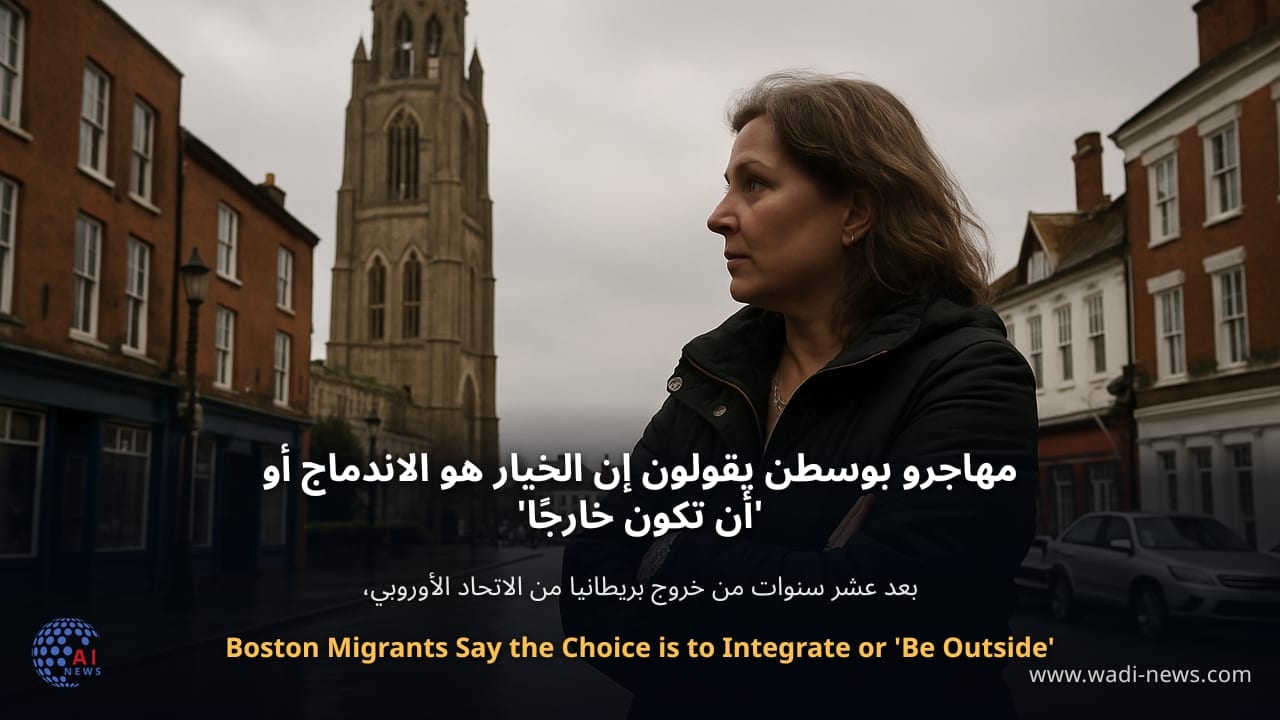
Iga Bontoft, a Polish immigrant who arrived in the UK 15 years ago, emphasizes the necessity of integration for migrants in Boston. She runs an advice center for foreign nationals and believes that understanding the local culture is crucial for building community ties. Bontoft states, "You can't be a part of a community if you don't integrate." This sentiment resonates with many in Boston, a town that has been labeled Britain's 'Brexit capital' due to its high leave vote in the 2016 referendum. The town has seen a significant influx of EU citizens, particularly in the food production sector, leading to a diverse population where nearly 20% are foreign-born.
Despite the challenges, many migrants have made efforts to integrate into the local community. Bontoft recalls her own struggles with language barriers and the importance of positive interactions in easing her transition. She notes that isolation can lead to mental health issues, stating, "If I didn't integrate I would start to drink, or get into depression because I'd feel isolated." This highlights the dual responsibility of both migrants and locals in fostering a welcoming environment.
Bartosz Fedkowicz, another Polish immigrant, shares his perspective on integration, advocating for mutual respect and understanding. He believes that integration should work both ways, emphasizing the need for locals to engage with newcomers. Fedkowicz's photography project aims to showcase the multiculturalism of Boston, countering stereotypes and promoting a positive image of the town's diverse population. He reflects on the fear that many migrants felt after the Brexit vote, fearing they would be forced to leave.
Local residents also express their views on integration. Mark "Billy" Billingham, a barber in Boston, notes that while diversity is welcomed, some migrants are reluctant to learn English or engage with the community. This reluctance can create divisions and hinder the integration process. Billingham's observations reflect a broader concern among locals about the perceived advantages that migrants may receive during a cost-of-living crisis, leading to tensions between different groups.
As Boston continues to navigate the complexities of immigration and integration, Bontoft calls for better communication and understanding among all residents. She believes that while there are challenges, the potential for a harmonious community exists if both migrants and locals are willing to work together. The ongoing dialogue about integration in Boston serves as a microcosm of the broader national conversation about immigration and community cohesion in post-Brexit Britain.