
ADVERTISEMENT
Economy
Scotland's Ill-Fated World Cup Story Finally at a Sorry End
Scotland's journey in the World Cup has come to a disappointing conclusion, with the team failing to progress beyond the group stage. This article reflects on the team's performance and the challenges they faced.
Jun 28, 2026 | 1-2 min read | By Wadi News Editorial Team
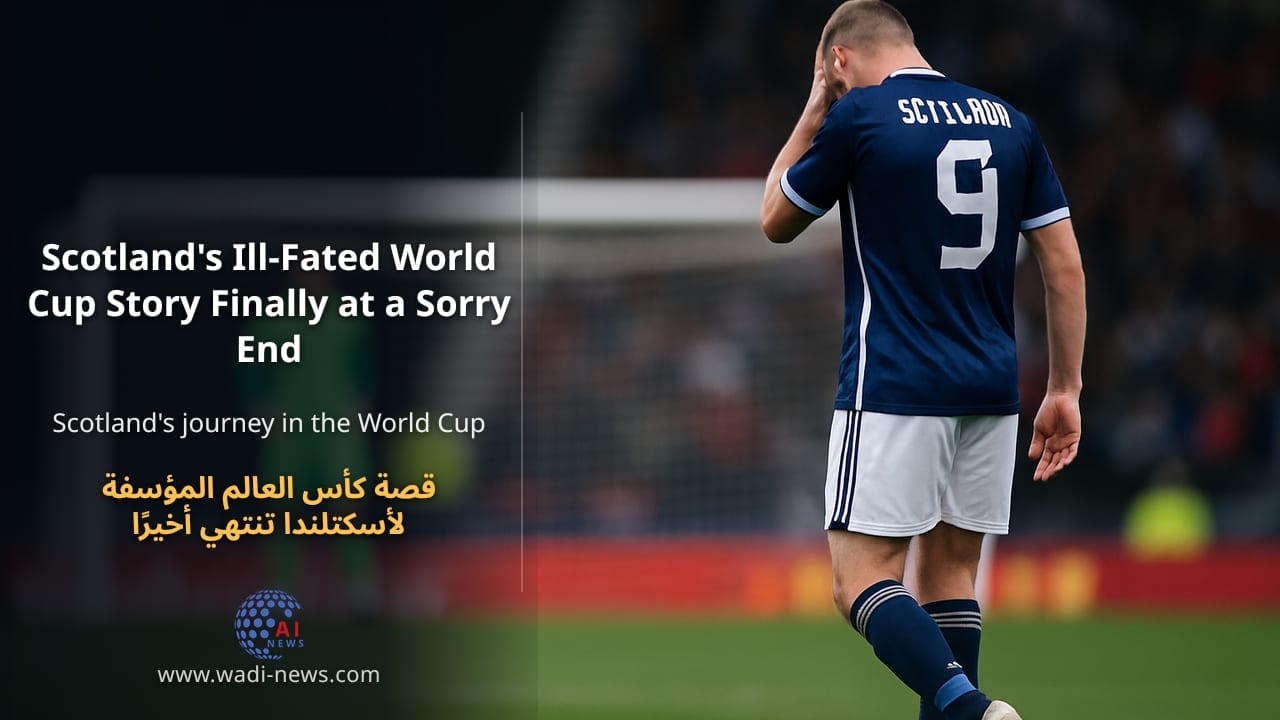
Scotland's World Cup campaign has concluded in a manner that many fans would describe as pitiful. The team, which has a storied history in football, found itself once again on the outside looking in, unable to make a significant impact in the tournament. With only one goal scored throughout their matches, the statistics paint a grim picture of a team that struggled to find its footing against stronger opponents. Elijah Just of Motherwell and New Zealand alone scored three times as many goals as the entire Scottish squad, highlighting the stark contrast in performance levels.
The Tartan Army, known for their unwavering support, did their best to rally behind the team, but even their passionate cheers could not lift the players to victory. Scotland played admirably in parts, particularly in the second half against Morocco and Brazil, but these moments were too few and far between. The reality is that Scotland faced a daunting challenge in a group that included some of the world's best teams, and their one win, while celebrated, was far from convincing.
Criticism has been directed at the team's management, with some calling for the coach's removal due to perceived tactical shortcomings. Others argue that the players, while hardworking, may not possess the quality needed to compete at this level. The underlying issue appears to be a systemic failure in developing young talent within Scottish football, as clubs remain hesitant to provide opportunities for emerging players. This stagnation raises questions about the future of the national team and its ability to compete on the world stage.
As the dust settles on this World Cup, the focus shifts to what lies ahead for Scottish football. The current squad is aging, and many players may retire in the coming years, leaving a potential crisis in player development. The manager has acknowledged the need for more dynamic and athletic players, but without a commitment from clubs to invest in youth, the path forward remains uncertain. The supporters, however, will continue to cherish their experiences and memories, even as the team grapples with its disappointing exit from the tournament.