
ADVERTISEMENT
Economy
Can solar power help Cuba survive the US oil blockade?
As US restrictions on oil shipments have left Cuba struggling to secure fuel, China is helping the communist island accelerate one of the world's fastest solar transitions.
Jun 28, 2026 | 1-2 min read | By Wadi News Editorial Team
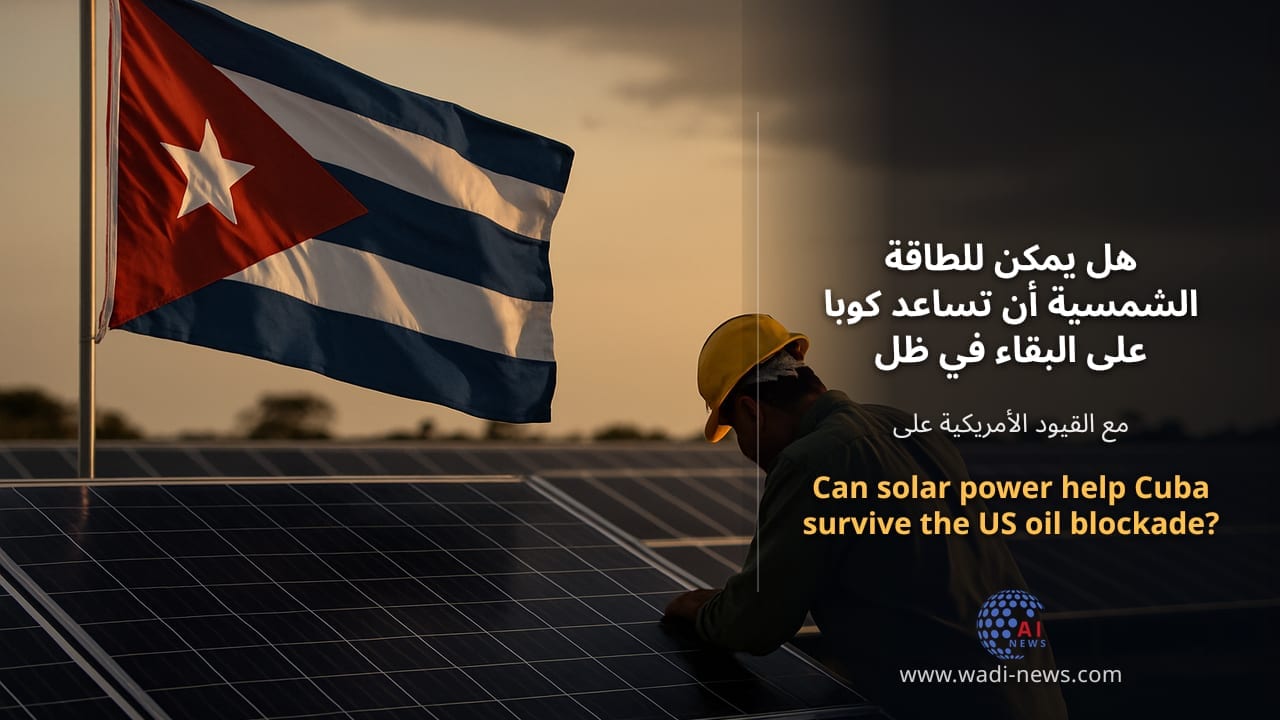
Cuba has been facing significant challenges in securing fuel due to stringent US restrictions on oil shipments. This blockade has severely impacted the island's economy and daily life, leading to widespread shortages and a struggle for energy resources. In response to these challenges, Cuba is turning towards renewable energy, particularly solar power, as a viable solution to mitigate the effects of the blockade. The country has seen a remarkable increase in the importation of solar panels and batteries over the past year, which has enabled the construction of numerous solar parks across the island. This transition to solar energy is not only a response to the immediate fuel crisis but also a strategic move towards sustainable energy independence.
China has played a pivotal role in this solar transition by providing the necessary technology and support to Cuba. The partnership between the two nations has resulted in a surge of solar energy projects that are transforming the energy landscape in Cuba. These projects are designed to harness the abundant sunlight that the island receives throughout the year, making solar energy a practical and efficient alternative to fossil fuels. As Cuba continues to develop its solar infrastructure, the potential for energy self-sufficiency becomes increasingly attainable, allowing the nation to reduce its reliance on imported oil.
The construction of solar parks is not just about energy production; it also represents a broader commitment to environmental sustainability. By investing in renewable energy, Cuba is taking steps to address climate change and reduce its carbon footprint. This shift towards solar power aligns with global trends towards cleaner energy sources and reflects a growing awareness of the need for sustainable practices in energy consumption. The benefits of solar energy extend beyond environmental considerations; they also promise economic opportunities through job creation in the renewable energy sector.
In conclusion, while the US oil blockade poses significant challenges for Cuba, the island's pivot towards solar energy presents a hopeful path forward. With the support of international partners like China, Cuba is not only working to overcome its immediate energy crisis but is also laying the groundwork for a more sustainable and independent energy future. The success of these solar initiatives could serve as a model for other nations facing similar challenges, demonstrating that renewable energy can be a powerful tool for resilience and recovery.