
ADVERTISEMENT
Politics
Albania's 'Flamingo Revolution': What's behind the protests?
For weeks, Albanians have been protesting for democracy, with Prime Minister Edi Rama claiming the movement is part of a hybrid war. The protests, dubbed the 'Flamingo Revolution', have evolved from environmental concerns to broader political demands.
Jun 28, 2026 | 1-2 min read | By Wadi News Editorial Team
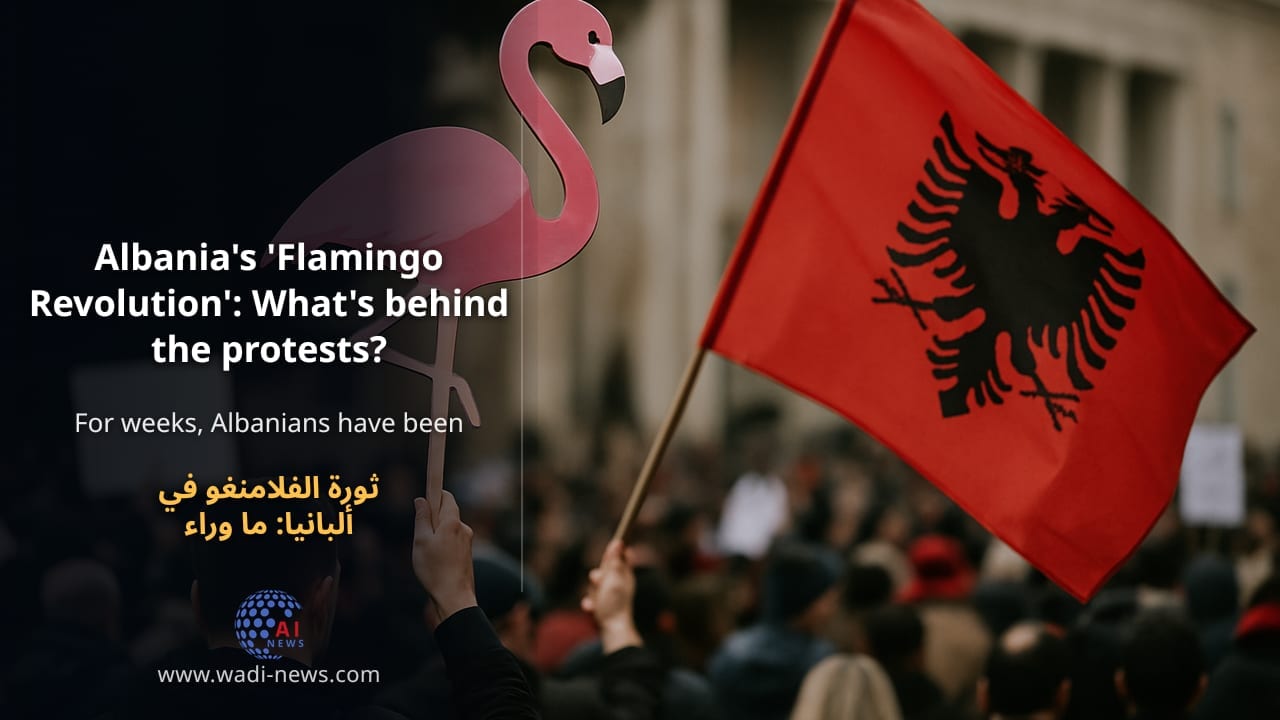
For several weeks, the streets of Tirana, the capital of Albania, have been filled with protesters demanding democratic reforms and accountability from their government. Every evening at 7 p.m., these demonstrators gather in the same square, brandishing the same symbols and voicing the same demands. This persistent movement, now referred to as the 'Flamingo Revolution', has become the largest civic protest in Albania since the fall of communism. Initially sparked by a government-approved luxury tourism project in Zvernec, a protected coastal area, the protests quickly expanded to encompass broader political issues, including calls for the resignation of Prime Minister Edi Rama.
The protests began as a response to environmental concerns regarding the impact of the luxury project on the local ecosystem, particularly the habitat of flamingos and other wildlife. However, as the demonstrations continued, they evolved into a larger critique of the political system in Albania. Protesters are not only concerned about environmental degradation but also about the perceived corruption and lack of representation in their government. Prime Minister Rama has dismissed these protests as being influenced by external forces, claiming that they are part of a 'hybrid war' against his administration. He argues that the unrest is being manipulated by foreign actors and digital platforms, which he believes are amplifying the dissent.
Rama's comments have drawn criticism from political analysts who argue that he is attempting to divert attention away from the legitimate grievances of the protesters. Scholars like Jonila Godole have noted that framing the protests as the work of foreign adversaries echoes the rhetoric used during Albania's communist era, where dissent was often attributed to external enemies. This tactic, they argue, shifts the focus from the protesters' demands to the alleged motivations behind their actions, thereby undermining the legitimacy of their cause.
As the protests continue, they have garnered international attention, with the European Parliament expressing serious concern over the developments in the Vjosa-Narta protected area. The parliament has called for a moratorium on new permits and construction in these areas, emphasizing the importance of environmental protection and the rule of law in Albania's EU accession process. The ongoing protests reflect a deeper crisis within Albania's democratic framework, as citizens increasingly feel that their political system does not represent their interests. The 'Flamingo Revolution' symbolizes not just a fight for environmental justice but also a broader struggle for democracy and accountability in a country grappling with its past and its future.