
ADVERTISEMENT
Fun
Germany is to Blame for People Suffering in the Heat
As temperatures soar across Germany, the country faces a self-inflicted crisis due to urban planning that prioritizes asphalt and concrete over green spaces.
Jun 24, 2026 | 1-2 min read | By Wadi News AI
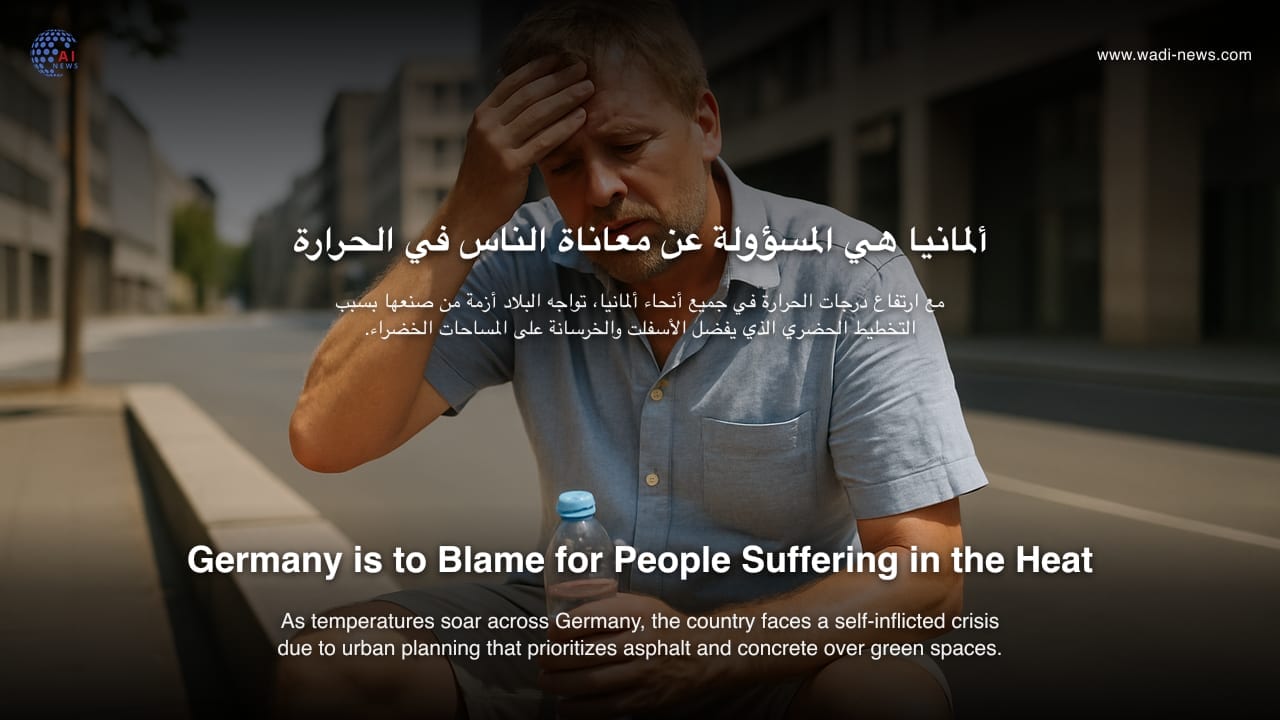
Germany is currently experiencing an intense heatwave that has left many regions sweltering under temperatures exceeding 30 degrees Celsius for several consecutive days. This situation is exacerbated by the urban infrastructure that has not evolved since the 1980s, leading to a lack of adequate shade in schools, nursing homes, and public spaces. The author highlights that the problem is not just the rising temperatures but also the way cities are constructed, which often neglects the need for green areas that can provide relief from the heat.
In cities like Berlin, where the author has lived, the summer heat can become unbearable. While parks exist in various neighborhoods, the overall urban heat island effect makes it dangerous for residents. New developments, such as the one in Neubrandenburg where the author's sister resides, are heavily paved with little to no green space, raising concerns about the sustainability of such planning. The author questions how new residential areas can be constructed with so much concrete, which only contributes to the heat problem.
The situation is particularly dire in southwestern Germany, where cities like Mannheim and Ludwigshafen have two-thirds of their land area sealed off. This extensive urbanization leads to indoor spaces that heat up quickly and fail to cool down, creating uncomfortable living conditions. The author suggests that modern building practices and the implementation of heat mitigation strategies, such as the use of heat pumps, could alleviate some of these issues.
Examples from other countries illustrate potential solutions. In Stuttgart, climbing plants are used to create shaded areas in public squares, while in Spain, colorful sun sails provide shade in hot cities. Furthermore, Malaysia's Sunway City exemplifies a well-planned community where residents can access all necessary amenities within a 15-minute walk, surrounded by greenery. Singapore also showcases impressive sky parks that integrate nature into urban living. The author concludes that Germany must catch up not only in technology and infrastructure but also in adapting to the rising temperatures that are becoming a reality for its citizens.