
ADVERTISEMENT
Economy
Wave of Insolvencies Continues: 'Peak of Bankruptcies' for Companies Not Yet Reached
Germany faces a record high in corporate bankruptcies, with nearly 13,000 insolvencies reported since the beginning of the year. The economic situation remains dire, with no signs of improvement in sight.
Jun 24, 2026 | 1-2 min read | By Wadi News AI
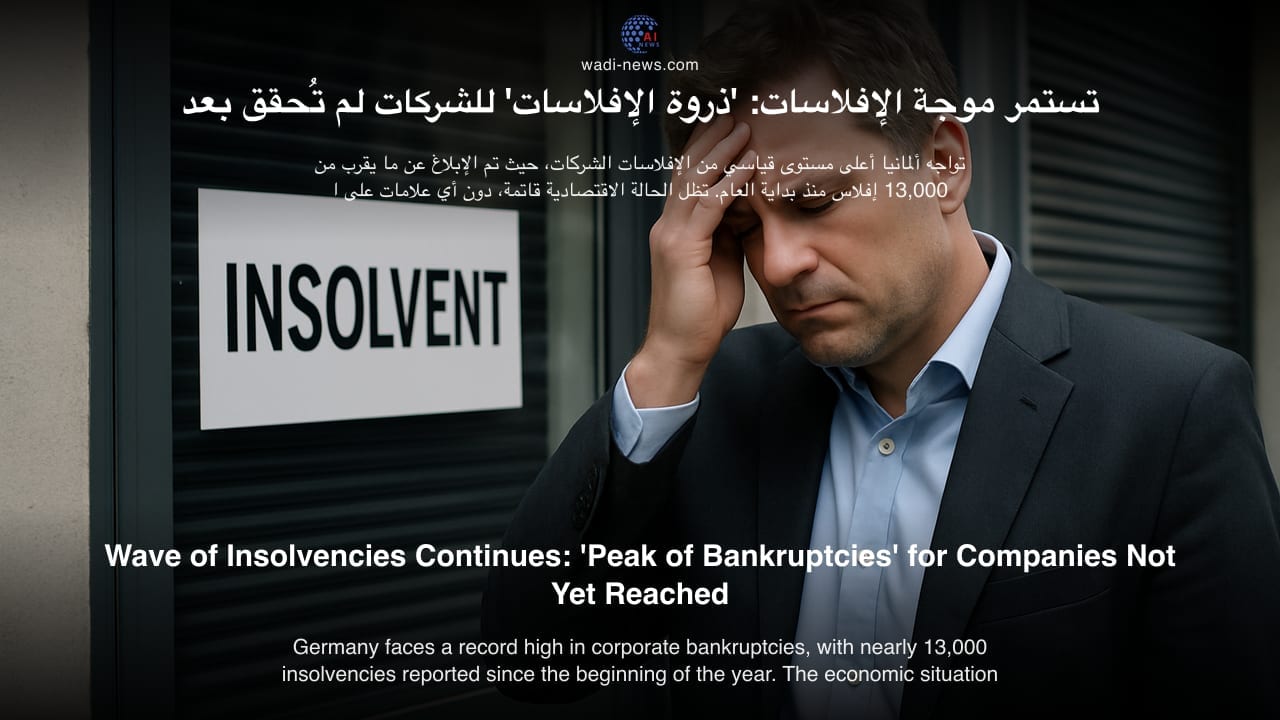
The economic landscape in Germany is currently marred by a significant rise in corporate bankruptcies, with economists from Creditreform reporting nearly 13,000 insolvencies since the start of the year. This alarming trend highlights the ongoing economic struggles faced by businesses across the country. The latest half-year report from Creditreform, released on June 23, 2026, underscores the severity of the situation, indicating that the peak of bankruptcies has not yet been reached. The report reveals that the number of corporate insolvencies is at its highest level in 13 years, reflecting a deep structural crisis within the German economy.
The impact of global conflicts, particularly the recent military actions involving Israel and the USA, has exacerbated the already precarious economic conditions. These geopolitical tensions have contributed to rising costs of raw materials and energy, further straining businesses that are already grappling with high operational expenses. Patrik-Ludwig Hantzsch, the head of Creditreform Economic Research, emphasizes that the current economic climate is characterized by a lack of consumer confidence and weak demand, which are critical factors leading to the surge in insolvencies.
In the first half of 2026, a total of 38,800 personal bankruptcies were recorded, marking a 2.3% increase compared to the same period last year. While this increase is less severe than in previous years, it still indicates a troubling trend as more households find themselves in financial distress. The rising costs of energy and food are significantly impacting consumer spending, which in turn affects retail and online sales. The GfK Consumer Climate Index, a key indicator of consumer sentiment, has shown a significant decline, reflecting the cautious spending behavior of consumers.
Looking ahead, Hantzsch predicts that a stabilization of the economy may not occur until at least 2027. The interconnectedness of corporate health and overall economic performance means that businesses will continue to face challenges until there is a marked improvement in economic growth. The current situation calls for urgent attention from policymakers to address the underlying issues contributing to this wave of insolvencies and to foster a more favorable economic environment for both businesses and consumers.