
ADVERTISEMENT
Politics
Bundeswehr Reforming Procurement: Faster, More Agile, Digital
Germany is transforming its military procurement to agile teams and modular technology to achieve faster and more efficient results.
Germany | May 21, 2026 | 1-2 min read | By Wadi News AI
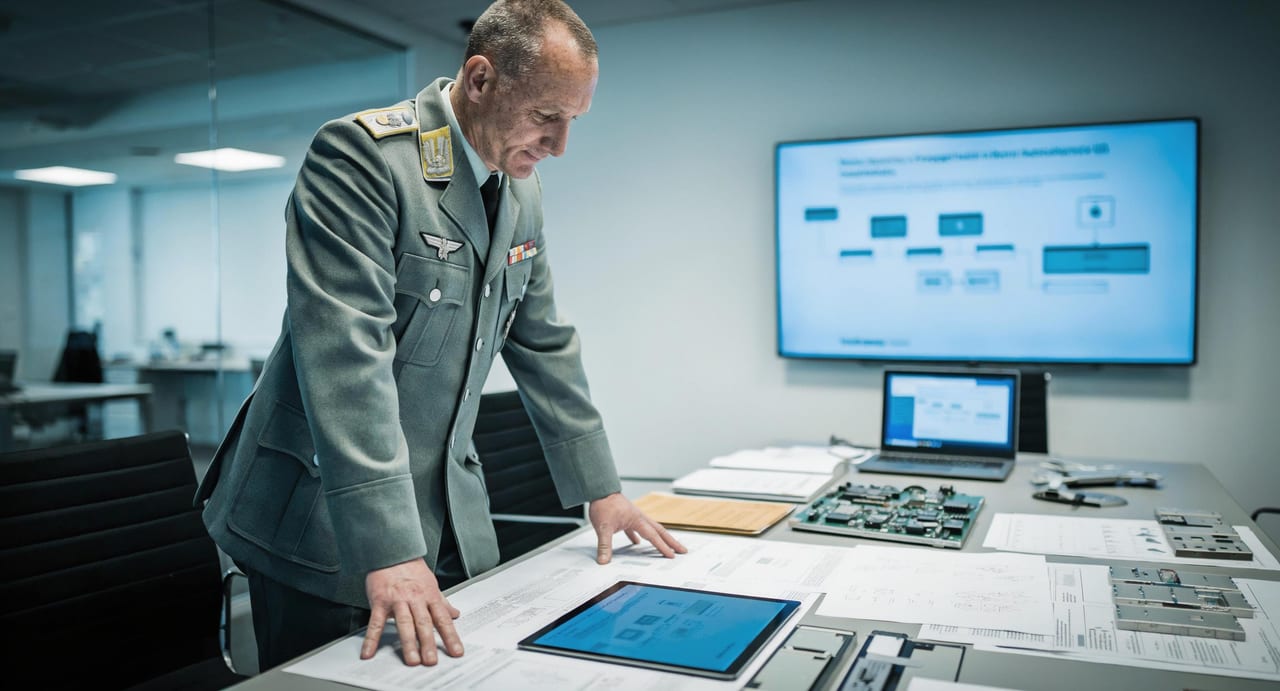
Germany is undergoing a significant transformation in its military procurement processes, shifting from rigid hierarchies to agile project teams and modular technology acquisition. This paradigm shift aims to end the years of inertia that have plagued defense projects. On Wednesday, Defense Minister Boris Pistorius unveiled plans for a radical restructuring of the Bundeswehr's procurement authority, transitioning it into a matrix organization. The goal is to spend substantial funds on military rearmament more efficiently and, crucially, more quickly. Traditional multi-year procurement cycles have proven to be strategic obstacles in light of rapid technological advancements on modern battlefields, particularly concerning unmanned systems.
As global military buildups intensify, new technologies and security strategies are increasingly attracting investor attention. The new European security strategy, including the role of hydrogen, is a focal point of interest. A key component of the reform is the expansion of innovation centers, including the Bundeswehr Innovation Center in Erding. These facilities are designed to better monitor market developments and manage suppliers more flexibly. Instead of waiting years for the perfect weapon system, Germany will now adopt a spiral development approach: delivering a minimally viable product quickly and then improving it incrementally. This strategy aims to avoid the pitfalls of previous large-scale projects that often faced technical obsolescence and massive cost overruns.
The German initiative is part of a broader transatlantic movement towards deregulated, market-oriented defense procurement. The United States has accelerated its own transformation following Executive Order 14265, issued in spring 2025, which establishes a clear preference for commercial solutions and expands the use of Other Transaction Authority (OTA) to bypass standard federal procurement regulations. The U.S. Department of Defense has institutionalized several pilot programs, including the "Anything-as-a-Service" project, which tests consumption-based contracts for software, data, and space-based infrastructure. Following closely, the "Software Fast-Track" program utilizes artificial intelligence for automated security checks, allowing providers to receive preliminary operating approvals much faster than through traditional manual processes.
Despite these advancements, the prominent "Replicator" initiative has faced criticism. Defense Minister Pete Hegseth highlighted significant progress in delivering thousands of unmanned systems in June 2025. However, reports from the Congressional Research Service by the end of 2025 indicate that while hundreds of systems were delivered by the August deadline for "Replicator 1," the original target of "several thousand" was significantly missed. Analysts attribute this discrepancy to ongoing challenges in scaling production and integrating autonomous systems into existing command structures.
As…