
ADVERTISEMENT
Tech
Perovskite Solar Cells Hit 24.3% Efficiency with New 10-Minute Vacuum Process
Researchers in Germany and Spain have developed a rapid vacuum coating process that produces highly efficient perovskite-silicon tandem solar cells with an efficiency of 24.3% in just 10 minutes.
Germany | May 21, 2026 | 3 min read | By Wadi News AI
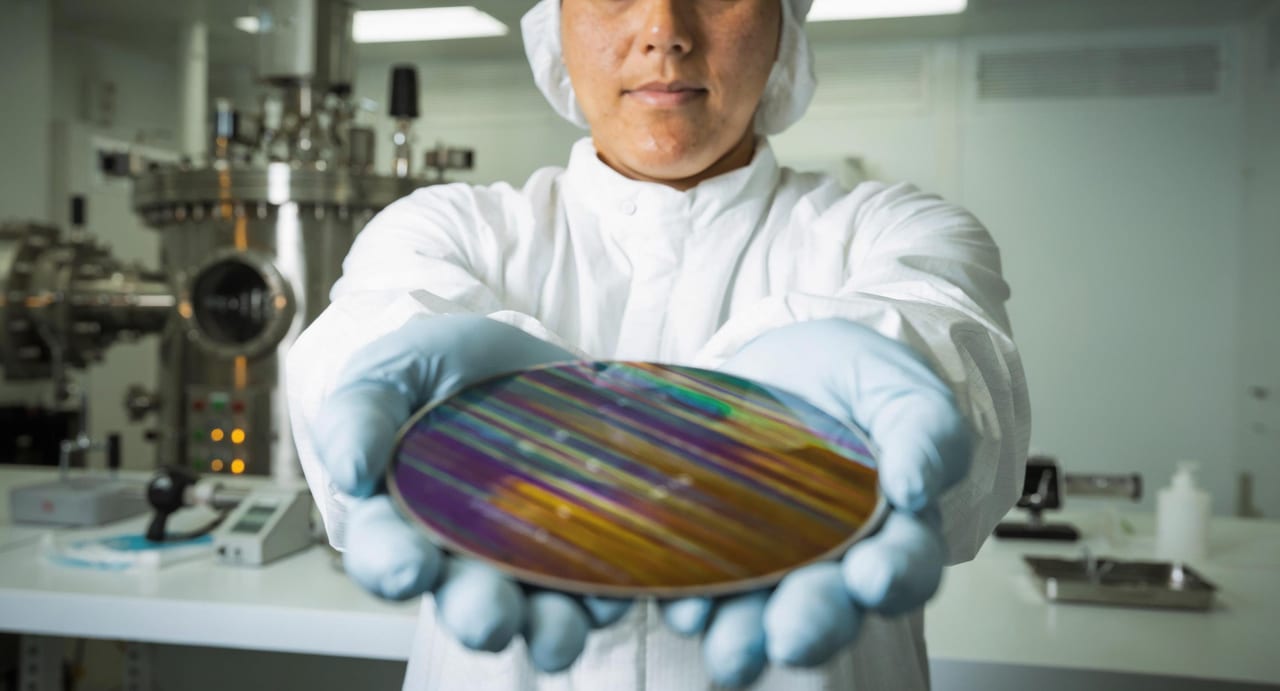
In a groundbreaking development, scientists from the Karlsruhe Institute of Technology in Germany and the University of Valencia in Spain have successfully created a fast, solvent-free vacuum process that can produce perovskite-silicon tandem solar cells with an impressive efficiency of 24.3% in just 10 minutes. This innovative method not only enhances the efficiency of solar cells but also significantly reduces manufacturing time, making it a potential game-changer in the solar energy sector.
The new vacuum coating process utilizes a technique known as close-space sublimation (CSS), which allows for the rapid deposition of uniform perovskite layers onto silicon surfaces. This is particularly important as the perovskite layer is the active component that captures sunlight, and achieving uniformity is crucial for maximizing efficiency. The researchers have demonstrated that this method can produce effective layers even on textured silicon surfaces, which are commonly used in advanced solar cells.
Ulrich Paetzold, a professor at KIT, emphasized the importance of speed and scalability in industrial manufacturing. He stated that the ability to produce uniform layers quickly is essential for practical applications. The research team carefully adjusted the composition of the perovskite material, specifically the bromine content, to optimize the absorption of sunlight and achieve a band gap of 1.64 electronvolts, which is ideal for solar energy conversion.
The results of this study, published in the journal Nature Energy, indicate that the CSS process can be applied across various silicon surface designs without altering production settings. This flexibility is critical for scaling up production to meet the growing demand for renewable energy solutions. The researchers tested the process on smooth, nano-structured, and micro-structured silicon surfaces, achieving efficiencies of 23.5%, 23.7%, and 24.3%, respectively. This consistency across different surface types highlights the robustness of the new manufacturing technique and its potential for widespread adoption in the solar industry.
The Future of Solar Energy

As the world shifts towards sustainable energy solutions, innovations like the rapid production of perovskite-silicon tandem solar cells are crucial. These advancements not only promise higher efficiency but also aim to reduce costs associated with solar energy production. With the increasing urgency to combat climate change, the adoption of such technologies could play a significant role in transitioning to a greener future. The scalability of the new vacuum process could lead to widespread implementation, making solar energy more accessible and affordable for consumers and businesses alike.