
ADVERTISEMENT
Politics
Amid Middle East conflict, ASEAN countries eye more coordinated response to future crises
Southeast Asian nations are planning to enhance their crisis response coordination, learning from the ongoing Middle East conflict that has impacted energy supplies and regional markets.
Arab World | May 8, 2026 | 1-2 min read | By Wadi News AI
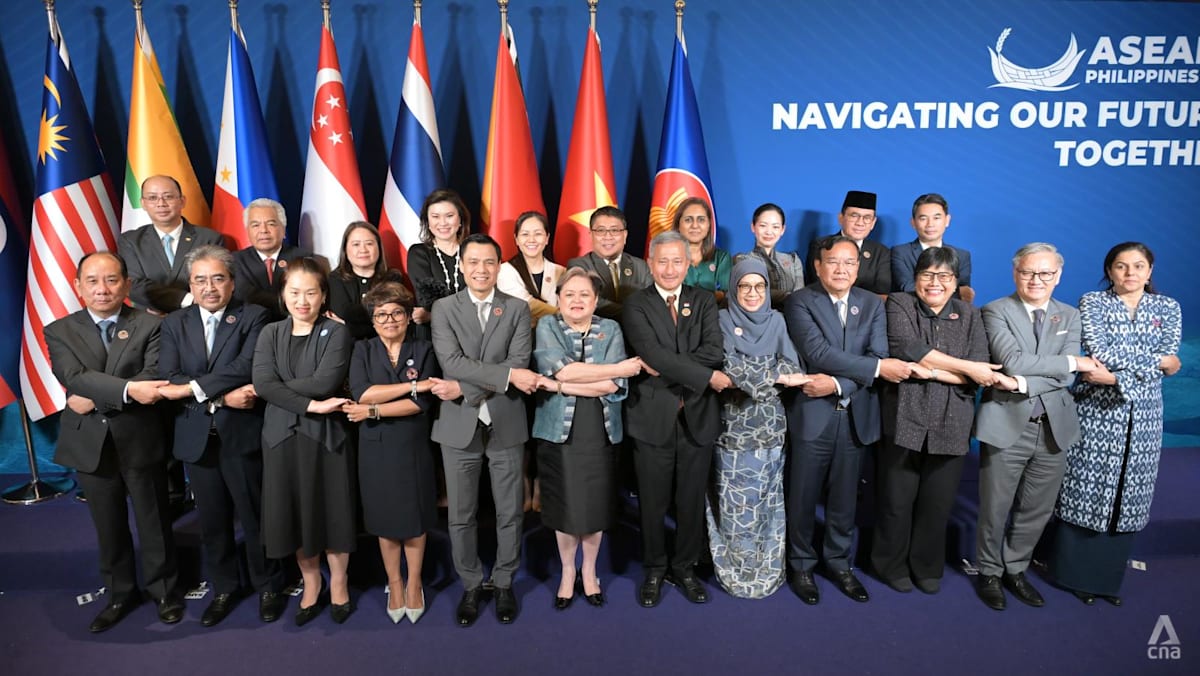
CEBU: Southeast Asian countries are aiming to better coordinate their responses to future crises, taking in lessons from the ongoing Middle East conflict that has squeezed energy and other supplies, and roiled regional markets. Foreign and economic ministers of the Association of Southeast Asian Nations (ASEAN) met on Thursday (May 7) to discuss the development of a 'crisis communication protocol' at the ministerial level to ensure 'coherent, timely, and coordinated response' to crises.
According to a statement released at the 48th ASEAN Summit, the ministers also exchanged views on the broader regional implications of the Middle East war. They identified 'practical, concrete response measures on strengthening energy security, safeguarding food security, and coordinating humanitarian responses'. Some proposals raised covered diversifying energy sources, suppliers and routes; enhancing food monitoring, information-sharing, and preparedness measures; and strengthening intra-ASEAN trade, investment, and supply chains.
The summit, which this year’s ASEAN chair Philippines is hosting in the central island province of Cebu, takes place amid the Middle East conflict involving the United States, Israel and Iran. The conflict, which began on Feb 28 when the US and Israel launched attacks on Iran, has disrupted shipping traffic through the Strait of Hormuz, the waterway through which Asia obtains a significant share of its oil and gas. Iran’s Revolutionary Guards' Navy said on Wednesday that safe transit through the Strait of Hormuz will be ensured with US threats coming to an end and new procedures in place, in its first reaction to Washington pausing operations to help stranded ships pass through the strait.
ASEAN has maintained that the conflict in the Middle East must be resolved diplomatically and peacefully, even as differences in energy exposure influence how members respond. Countries like the Philippines and Vietnam are more reliant on energy imports from the Middle East and are looking to alternative suppliers like Russia. Other ASEAN members such as Indonesia, Malaysia and Thailand have greater domestic capacity and are focusing on subsidies and price controls, analysts previously told CNA. Given these differences, analysts cautioned that expectations for major coordinated measures remain modest, with national-level responses likely to dominate the summit.
But Thursday’s statement said ASEAN is committed to increasing coordination among relevant ASEAN sectoral bodies - including political-security, economic, and sociocultural - to 'mount an effective and comprehensive response' to the conflict. 'Notably, the meeting endorsed for adoption at the 48th ASEAN Summit an ASEAN Leaders’ Statement on the Response to the Middle Crisis which will bring together ASEAN’s unified response,' it said. A Philippine official confirmed on Thursday that ASEAN will issue a joint statement on how the regional bloc would respond to the Middle East crisis. The su…