
ADVERTISEMENT
Economy
Pakistan Faces Up to $68 Billion Economic Hit if Middle East War Escalates: Report
A recent report indicates that Pakistan could suffer an economic shock of up to $68 billion if the Middle East conflict continues and the Strait of Hormuz remains closed.
Arab World | May 8, 2026 | 1-2 min read | By Wadi News AI
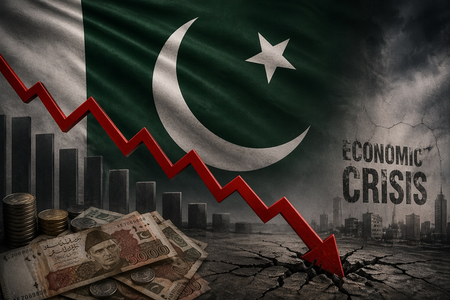
On May 7, a report presented by the Policy Research Institute of Market Economy (PRIME) to the National Assembly Standing Committee on Finance highlighted the potential economic repercussions for Pakistan due to the ongoing conflict in the Middle East. The report outlines three scenarios that could unfold depending on the duration and intensity of the conflict. In the most optimistic scenario, where hostilities cease quickly and the Strait of Hormuz reopens, Pakistan could face an economic cost of approximately $10 billion, which is about 2.5% of its GDP.
However, if the conflict persists for an additional three months, the economic burden could escalate significantly, with estimates ranging from $24 billion to $32 billion, equating to nearly 8% of GDP. The worst-case scenario, which involves a prolonged closure of the Strait and a surge in crude oil prices to $150 per barrel, could result in an economic shock of between $50 billion and $68 billion, representing nearly 17% of the GDP. This alarming forecast underscores the vulnerability of Pakistan's economy to external shocks, particularly those affecting its energy imports.
The analysis by PRIME emphasizes the adverse effects on Pakistan's external sector, including rising import costs, declining exports, and reduced remittance inflows. These factors could severely weaken the country's balance of payments, leading to a depletion of foreign exchange reserves and potentially triggering a financial crisis, even with the support of an IMF program. Currently, Pakistan's foreign exchange reserves are around $15 billion, which poses a significant challenge in financing a widening current account deficit.
Moreover, the report warns of escalating inflationary pressures, predicting that inflation could reach around 10% in a mild scenario, while a prolonged crisis could push it to between 15% and 18%. This inflationary surge would be driven primarily by currency depreciation and rising prices of food and energy. The findings of this report serve as a stark reminder of the interconnectedness of global events and their direct impact on national economies, particularly in regions heavily reliant on energy imports.